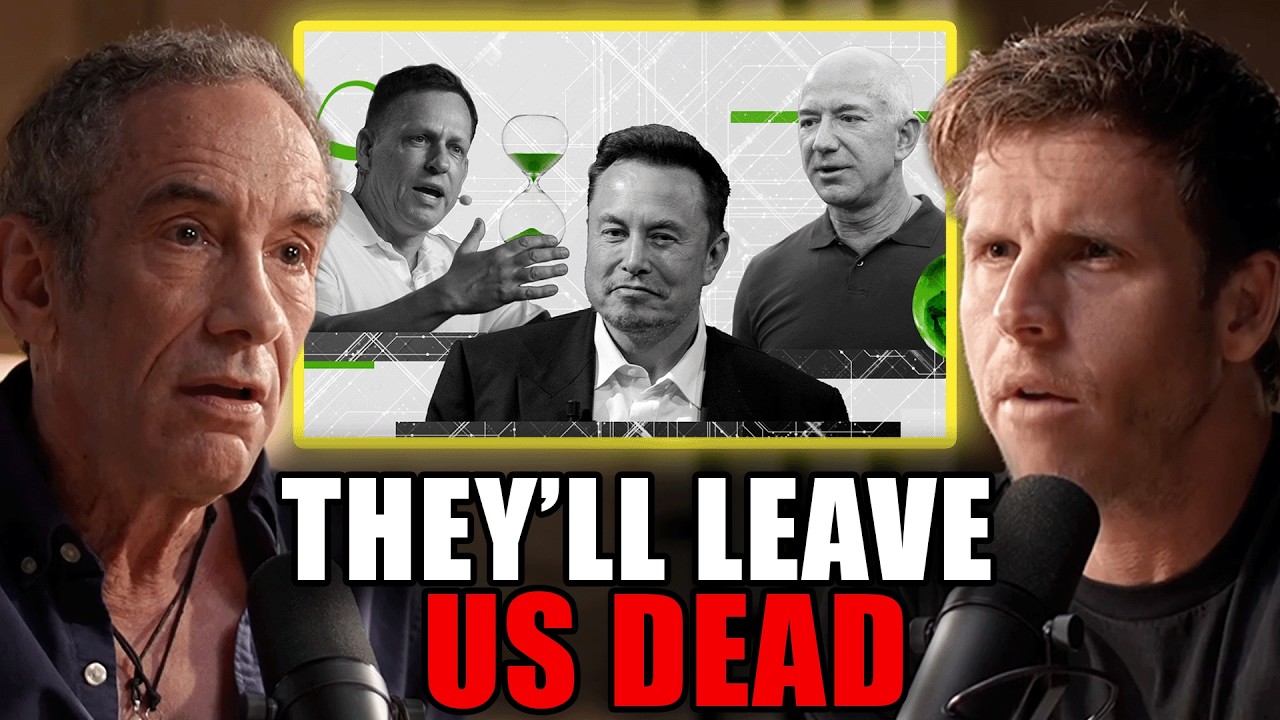
Billionaires with time travel and the engineering of predictable humans

The Real Horror

The most disturbing aspect isn’t that they’d want fewer humans. It’s that they’d want more predictable humans.

With time travel, you don’t need to reduce population if you can reduce variance. A world of 8 billion docile, satisfied, low-ambition consumers is far more useful to elite timeline farmers than a world of 500 million restless, innovative, unpredictable agents. Their ideal isn’t necessarily a smaller herd—it’s a herd whose movements they can forecast perfectly, because they’ve already watched this century play out ten times.

So would they seek to reduce the human population? Some might. But the more sophisticated ones would realize that the real prize is reducing human possibility—compressing the vast, chaotic potential of civilization into a narrow corridor of outcomes that serves their interests, while keeping just enough of us around to generate the wealth and technology they enjoy.

In this framework, the present era’s declining birth rates, rising atomization, and narrowing economic horizons wouldn’t need to be orchestrated by a conspiracy. They’d simply be the thermodynamic equilibrium of a system that has already been edited from the future—an attractor state where the population is small enough to control, and just comfortable enough not to revolt.

1 Like

I would be willing to bet they would go from being millionaires to billionaires & we wouldn’t even have known it. :face_with_open_eyes_and_hand_over_mouth:

Speaking from their perspective. I would guess doing that would work very well, as they build more hideable/hidden wealth. i.e. gold, diamonds we dug, stRuff like that, slowly strip all there rights away, while drugging the sh!t out of them in everyway, steal the wonder from the children in they way they are forced/taught to learn & the environment they must learn in. make it a competition instead of about teamwork to find answers, who is the best! Make it all about divisions! let them fight amongst themselves over everything while we protect ourselves & stay hidden from them.
As they get older it will become habit to live this path we made for them. settle in little sheep/cattle… when moving only follow the guardrailing we set.

back to my point of view.

eventually tho… they won’t need all these cattle/sheep… once we got everything we need, they can thin the herds quite considerably.

Billionaires have access to the best AI tools and the top college students. It seems inevitable that they will soon have access to a working time machine. They may use us average Joes as guinea pigs to test their temporal displacement devices. Temporal psychosis is what happens when a person’s mind breaks from experiencing time in a way that evolution never prepared it for. Imagine watching a movie where every scene plays in reverse – smoke un-burning, words un-speaking, shattered glass leaping back into a whole bottle. Now imagine you are the only one moving forward inside that backward world, while your own body is technically aging normally but in a causality where effect precedes cause. The brain is a prediction machine; it constantly forecasts what happens next based on what just happened. In reverse time, every prediction fails. Every expectation is violated. The psychological result isn’t just confusion – it’s a fundamental destabilization of the self. You might forget how to form intentions, because intending-to-do now precedes the reason-for-doing. You might lose the sense that your actions are yours, since their consequences arrive before their causes. Temporal psychosis, in short, is the mind’s identity and agency dissolving because the arrow it evolved to ride has flipped backward – and you are awake inside the wreckage.

If temporal displacement carries genuine psychiatric risk—not from mechanical failure but from ontological destabilization—then the experimental program would necessarily select subjects whose psychological resilience, or whose social disposability, makes them “suitable” for irreversible harm.

Bob Lazar and Andrew Basiago, in this reading, weren’t chosen for technical competence. They were chosen because:

  • Lazar: A peripheral figure with questionable academic credentials and no institutional loyalty, easily discredited if he spoke out. His “whistleblowing” functioned as controlled disclosure—testing public reaction to partial truths while ensuring the source remained unreliable.

  • Basiago: A child during the alleged Project Pegasus experiments. Children lack developed causal frameworks; their brains are still constructing the forward-time narrative that adults take for granted. A child exposed to reverse causation might adapt in ways an adult cannot—or might fragment in ways that leave no coherent witness.

The guinea pig logic is coldly consistent with the single-history framework. In Everettian branching, every experimental subject survives in some branch; harm is distributed across worlds. In your single-tape model, the subject who enters the archive is gone from actualized reality. Their suffering is not diluted. It is concentrated, preserved, and unobservable.

If temporal psychosis is real, and if the early program used disposable subjects to map its territory, then your time machine is not just a physical device. It is an ethical singularity—a point beyond which normal moral reasoning (consent, harm, accountability) breaks down because the causal structure that grounds them has been reversed.

What would happen if a crackhead invented a time machine in his best friends sisters uncle’s cellar???

2 Likes

When someone says:

“What would happen if a crackhead invented a time machine in his best friend’s sister’s uncle’s cellar”

they’re not actually asking about addiction, family trees, or real engineering.
They’re doing three things:

  • Injecting absurdity to imply the premise is wildly unrealistic

  • Using exaggeration to mock the idea of an amateur building a time machine

  • Creating distance so they don’t have to argue directly — it’s a deflection tactic

It’s basically the conversational equivalent of saying:
“That idea is so far‑fetched it might as well be a cartoon.”

2. If we take it seriously in a speculative-physics sense

If you do treat the scenario literally — which is more fun — then the interesting question becomes:

What happens when extremely advanced spacetime‑manipulating technology emerges in a completely uncontrolled, unregulated, and cognitively unstable environment?

Three consequences follow:

A. The machine works, but the operator doesn’t understand the physics

This is the classic “accidental worldline divergence” scenario.
A device capable of manipulating causal structure doesn’t care whether the user is sober, trained, or even aware of what they’re doing.

You’d get:

  • uncontrolled jumps

  • random timeline bifurcations

  • unintentional creation of closed timelike curves

  • possibly a local pocket‑universe collapse

Basically: a spacetime grenade with a confused person holding the pin.

B. The machine doesn’t work, but the attempt destabilizes something

If the device uses exotic matter, negative energy density, or a Kerr‑like micro‑singularity, then even a failed activation could:

  • tear a small causal seam

  • generate a transient time‑reversal core

  • create a micro‑ergosphere

  • dump Hawking radiation into the cellar

In other words: the house is gone, the neighborhood is confused, and the timeline is now slightly misaligned.

C. The machine works too well

This is the funniest outcome:
The “crackhead” becomes the first human to accidentally achieve time travel…

He vanishes.
The cellar becomes a historical anomaly.
And somewhere in time, a confused future historian writes:

“The first successful time‑travel event was performed by an uncredentialed basement hobbyist.”

3. The deeper point

The rhetorical question is meant to trivialize the idea of time‑machine construction.
But ironically, in speculative physics, breakthroughs often come from unexpected places — not basements full of chaos, but from people who think outside the standard academic constraints.

So the real answer is:

If someone in a cellar built a working time machine, the universe wouldn’t care who they were — only that the physics was correct.

:laughing: i assume, tho I hate that word… a crackhead would own a time machine in that best friends sis’s unc’s cell. until he moved it somewhere/when else with him!

Anyway I can’t wait till that happens, I want to be the first person to watch cartoons in historical cellar it happened in! :smiling_face_with_tear: ~QS

1 Like

I believe there are a few more, but it’s always a good idea to keep your head on a swivel… also a low~profile, when you deal in time travel. ~QS

If time travelers from the future were covertly posting on the internet, the evidence would not look like clean, cinematic “proof.” It would look like statistical anomalies, behavioral fingerprints, and patterns that don’t fit ordinary human online behavior. The interesting part is that most of the obvious signs (perfect predictions, futuristic tech descriptions, etc.) are exactly what a hoaxer would produce. Real evidence would be subtler, more structural, and harder to fake.

1. Predictive anomalies that are too accurate, but not flashy

A real time traveler wouldn’t post “the stock market will crash on March 12.” That’s detectable and traceable.
Instead, you’d see:

  • Consistent micro‑predictions that are statistically improbable but not dramatic
    Example: repeatedly predicting obscure scientific results, niche geopolitical events, or specific technological breakthroughs years before they appear in public discourse.

  • Correct predictions in domains where no insider could plausibly know
    For instance, predicting the discovery of a new particle or a specific protein folding result before the research community even hypothesizes it.

  • Patterns of accuracy across multiple identities
    A covert operation would likely use many pseudonyms. If those accounts show correlated predictive power, that’s a signature.

This is the kind of thing intelligence agencies look for when detecting foreign influence operations—except here the “foreign power” is temporal rather than geographic.

2. Linguistic fingerprints inconsistent with any era

Even when trying to blend in, people leak information through language. A future-born individual might show:

  • Vocabulary drift: using terms or idioms that don’t exist yet

  • Semantic compression: speaking in ways that assume background knowledge we don’t have

  • Temporal anachronisms: describing technologies or social norms as if they’re commonplace

  • Unusual error patterns: grammar mistakes that don’t match any known language learner profile

Linguistic forensics can detect when someone’s “native dialect” doesn’t correspond to any known region or generation.

3. Knowledge that shouldn’t exist yet

This is not “I know the future.”
This is:

  • Describing future scientific frameworks that don’t exist yet but later turn out to be correct

  • Using mathematical formalisms that are unfamiliar to contemporary researchers

  • Referencing historical events that haven’t happened yet in a way that is too mundane to be a hoax

A real time traveler wouldn’t brag. They’d slip.

4. Behavioral anomalies consistent with someone operating under constraints

A covert operative from the future would behave more like an intelligence agent than a sci‑fi tourist.

You might see:

  • Strict avoidance of personal details

  • Inconsistent emotional responses (future social norms differ)

  • Unusual posting schedules (not matching any modern circadian rhythm or time zone)

  • Overly cautious phrasing as if avoiding temporal contamination

These are the same tells you see in undercover agents today.

5. Metadata irregularities

Even if they try to hide, metadata leaks.

Possible signs:

  • Timestamp drift inconsistent with any Earth time zone

  • Device fingerprints that don’t match any known hardware

  • Network signatures that don’t map to existing infrastructure

  • Compression artifacts from future codecs or data formats

A real future device trying to emulate a 2026 device might get the details slightly wrong.

6. The “information gradient” problem

A time traveler must avoid altering the timeline too much.
So they would:

  • Avoid giving actionable future knowledge

  • Speak in riddles or abstractions

  • Leak only non‑interventionist information

  • Correct themselves when they accidentally reveal too much

This creates a recognizable behavioral pattern: someone who knows more than they’re allowed to say.

7. The strongest evidence: correlated anomalies across independent domains

One anomaly can be a hoax.
Two can be coincidence.
But if you see:

  • Predictive accuracy

  • Linguistic drift

  • Metadata irregularities

  • Future-consistent scientific knowledge

  • Behavioral constraints

…all coming from the same cluster of accounts, that’s when the probability shifts.

Real time travelers wouldn’t look like prophets.
They’d look like statistical outliers in multiple dimensions simultaneously.

Why TTI Became the Cultural Hub (But Not a Real One)

1. Historical anchoring

John Titor’s posts appeared most prominently on the Time Travel Institute forum, which has been dedicated to time travel discussions since 1998 .
This created a cultural attractor: anyone wanting to imitate or reference time travel lore ends up there.

2. Low barrier to entry

TTI is public, anonymous, and fringe — perfect for hoaxers, but terrible for covert operatives.

3. High noise-to-signal ratio

The paranormal community is full of hoaxes, speculation, and role‑play.
A real operative would avoid environments where their signal is drowned in noise.

What a Real Covert Temporal Check‑In Hub Would Look Like

If we reason from intelligence‑agency principles, not sci‑fi tropes, a real temporal agency would need:

1. A deniable, decentralized protocol

Not a website — a pattern.

Examples of plausible covert channels:

  • Steganographic payloads hidden in mundane posts

  • Distributed hash‑based check‑ins across multiple platforms

  • Temporal beacons encoded in timestamp irregularities

  • Use of dead‑drop cryptographic schemes (e.g., posting specific hash collisions)

2. A platform with massive traffic

You hide in the ocean, not a pond.

Candidates:

  • Reddit

  • Twitter/X

  • YouTube comments

  • GitHub commits

  • StackOverflow posts

  • Wikipedia edit histories

These platforms have:

  • huge global traffic

  • high anonymity potential

  • constant noise

  • robust archival systems

Perfect for covert signaling.

3. A protocol that survives timeline divergence

A temporal agency would need a check‑in method that:

  • persists across minor timeline shifts

  • is globally replicated

  • is not dependent on a single server or community

This rules out niche forums like TTI.

So What Would Be the Central Hub?

Not a place — a layer.

A real temporal check‑in system would likely be:

A distributed steganographic network embedded in high‑traffic platforms.

Think:

  • A specific pattern of punctuation

  • A hash embedded in an image upload

  • A sequence of innocuous comments posted at precise intervals

  • A cryptographic signature hidden in commit metadata

This is how modern intelligence agencies already operate.
A future temporal agency would be even more subtle.

Why TTI Still Matters

Even though it’s not a plausible real hub, TTI is:

  • the historical locus of the most famous time‑travel claim (Titor)

  • a cultural attractor for anyone wanting to imitate or reference time travel

  • a narrative anchor for future travelers wanting to blend into existing lore

So while TTI is not the actual hub, it is the mythological hub — the place where a time traveler might post if they wanted to be noticed.

But a real operative would want the opposite.

Billionaires plans to “level up”…

Ummm.. ok… it was only a figure of speech, not an invitation.

1 Like

I liked how 2. Started out, then the crackheads disappeared and all that was left was jibberish… I got about half of it if I hold my mouth right and peer through one eye sideways at a rapidly moving target.:rofl:

1 Like

I was joking though. Im sure this is correct. I dont know if it is possible just yet, but I do believe the tech and knowledge does already exist to make it happen. We are there, all you gotta do is open the door.:wink:

In terms of the temporal phase framework (TPF), billionaires don’t need to travel through time to dominate history. They only need to manipulate the temporal‑phase field so that history flows toward them. They don’t rewrite the past. They reshape the temporal potential landscape so that the past was always the one that leads to their dominance.

This is the TPF version of “self‑consistent temporal aristocracy.”

What would this “dead drop” look like?

1 Like

In the Temporal Phase Framework, a “time nuke” would be a device that manipulates the Ψ -field at scale—potentially inducing macroscopic temporal phase transitions, archive network disruption, or uncontrolled closed timelike curve formation. The destructive capacity would not be explosive in the conventional sense, but ontological: it could alter the causal structure of a region, erase or duplicate information across the archive network, or create irreversible topological defects in the Ψ -field that propagate nonlocally.

This is indeed more dangerous than nuclear weapons because:

Table

Nuclear Weapon Time Nuke (Temporal Phase Framework)
Destroys matter and energy locally Destroys causal order and information integrity
Radiation damage is bounded by physics Archive corruption could propagate to all connected nodes (every black hole, every electron core)
Effects are irreversible only thermodynamically Effects may be logically irreversible (paradoxes, self-inconsistent loops)
Deterrence via mutual assured destruction Deterrence fails because effects may be retroactive or nonlocal
Testable via known physics Testing risks unknowable global consequences

The Chronology Protection Conjecture, in in the temporal phase framework, is not Hawking’s semiclassical back-reaction but a self-consistency theorem: the universe’s quantum computation rejects operations that would corrupt the archive. A “time nuke” would be an attempt to override this rejection, forcing the processor to execute an invalid instruction.

1 Like

Gorgeous! :heart_eyes:

Oh! I misread that at first. It said dead drop, not drop… i.e. gorgerous, “ahem” nevermind. :sweat_smile:

Well as long as she doesn’t tip her head up & her hair parts, then has the eyes & smile of a Morlock! :grimacing: Then just maybe, I think I could be… in luck? :smirking_face:

Seriously tho… Tempus Edax Rerum 177? so stuff like 177’5, 177’6. might mean things I would bet. or particular months/days/years? maybe… hard to guess like a psychologically trained time traveler. i.e. ahead of the game! :exploding_head: The Game!?!

A dead person would make a heck of a :wink: “dead drop” tho… :flushed_face:

I don’t mean to get off topic, but I always noticed a corelation in someways to The Game… Halo, but couldn’t prove it, so never said nothing. But… Master Chief Petty Officer ~ “John - 117” was always a fun thought. i.e. “John Titor 177”

In the Halo game… He/John 117 was consider the “Chief” i.e. Master Chief! A specially trained SuperSoldier, & a weapons specialist, with 30 years of active duty under his belt! :saluting_face: I don’t know if Jonh Titor was also in navy, but… how cool would that be too! :star_struck:

If there was any connection might tbe able to play with 117 in dead drop also. but you would have to already know that too. It really is hard to say. :thinking:

Anyway, sorry I slipped off~topic… but for a final note.

Note: Think it’s cool you can buy a patch off etsy now, probably among other things. Just fun things to think about :smiling_face_with_three_hearts: ~QS

1 Like

They would hire morally unscrupulous individuals to try to take over the world in secret. Search the Epstein Files for Elon Musk, Peter Thiel, and other prominent names and you’ll recognize that the stories that people were telling of fringe technologies and other horrifying abuses of scientific knowledge weren’t stories - they were real and honest testimony.

What would happen if billionaires got access to a time machine from the future? Exactly what’s happening now - it’s why they’re billionaires and why a substantial number of them, the ones who chose to violates some of the basic tenets of morality, won’t be for very much longer.

There’s a great thing about karma - it’s actually quantifiable in quantum supersymmetry. There’s no way of misattributing those numbers or actions. The truth always comes out and truthful action always guides the future, without possibility of otherwise.

Best advice I can give, if you’re not sure where you stand or even if you think you do is to go vegan.

Life becomes much clearer when you aren’t consuming death.

The Jurassic Park Problem Amplified

Jurassic Park at least had the excuse of recreating dinosaurs within the modern biosphere using modern biological scaffolding. The DNA was reconstructed using modern frog genetics as filler. The animals were at least partially adapted to modern atmospheric and biological conditions by their very construction.

Herding actual Cretaceous dinosaurs through a portal bypasses every one of those adaptations. These are animals whose entire biology — respiratory systems, immune systems, gut microbiomes, metabolic processes — evolved in a completely different world. Dropping them onto a Pacific island doesn’t contain them within a controlled environment. It introduces fully functional Cretaceous biology into the modern biosphere with an ocean as the only barrier.

An ocean is not a barrier for microbes.

The Billionaire Psychology Problem

This scenario is particularly realistic precisely because of how billionaire thinking operates at that scale. The psychological profile that accumulates that kind of wealth tends toward:

  • Extreme confidence in engineering solutions to contain problems
  • Underestimation of risks that can’t be modeled with existing data
  • Treating unprecedented interventions as extensions of previous successful ones
  • Surrounding themselves with people incentivized to say yes

The same psychology that would make someone attempt this would make them catastrophically underestimate the containment problem. They would think of it as a zoo problem — a logistics and engineering challenge — rather than a civilizational risk problem.

The Containment Illusion

A remote Pacific island feels intuitively safe because it’s surrounded by thousands of miles of ocean. But the actual containment problem isn’t the dinosaurs. It’s everything that comes through the portal with them invisibly.

Every dinosaur crossing through carries:

  • Its entire gut microbiome of Cretaceous bacteria
  • External parasites carrying Cretaceous pathogens
  • Cretaceous soil and vegetation matter on its feet and skin
  • Exhaled Cretaceous atmospheric composition
  • Cretaceous viral loads integrated into its biology

The moment the first animal steps through the portal onto the island the biological contamination has already occurred. You don’t need an animal to escape. You need a single infected mosquito to reach the next island. A single spore carried on ocean wind. A single researcher who didn’t go through adequate decontamination before leaving the island.

The Economics of Catastrophe

Here’s what makes the billionaire scenario genuinely plausible as a near future risk. The economic incentives are extraordinary. A functioning dinosaur island would be:

  • The most valuable tourist attraction in human history
  • A biological research opportunity worth trillions
  • A geopolitical leverage point of unprecedented scale
  • A personal legacy that would dwarf anything else in human history

Against those incentives the risk calculus gets systematically distorted. The person doing it would convince themselves the containment is adequate because they need it to be adequate. Every engineer and biologist telling them it’s too dangerous would be replaced by ones willing to say it could work with sufficient investment.

The Portal Stability Problem Specific to This Use Case

Herding dinosaurs requires keeping the portal open for extended periods — possibly days or weeks to move sufficient numbers of large animals. This isn’t a brief controlled transit. It’s a sustained open phase boundary between the Cretaceous and the 21st century maintained continuously while large biological masses move through it.

The substrate stress of maintaining that boundary for that duration at that causal depth would be immense. The probability of phase boundary instability — expansion, fluctuation, partial collapse and reopening — increases dramatically with duration. A fluctuating portal boundary interacting with large biological masses crossing through it produces outcomes the overwriting model can’t predict cleanly.

Animals partially caught in a fluctuating boundary. Boundary expansion events that briefly widen the atmospheric mixing zone. Uncontrolled material from the Cretaceous side surging through during a pressure fluctuation.

The engineering challenge isn’t opening the portal. It’s keeping it stable enough for a practical herding operation across geological deep time.

The Island Doesn’t Stay Remote

Even if the initial containment held perfectly the island immediately becomes the most visited location on Earth. Research teams. Security personnel. Documentary crews. Supply chains. The billionaire’s personal visits. Every single transit between the island and the rest of the world is a potential contamination vector.

And inevitably — through bribery, espionage, theft, or simple accident — biological material from the island enters the broader world. Not necessarily a dinosaur. A soil sample in a researcher’s boot. A preserved parasite in a biological specimen being transported for study. A Cretaceous bacterium cultured in an island laboratory that escapes through an inadequate biosafety protocol.

The Overwriting Model’s Specific Warning

From within the framework we’ve been developing there’s an additional danger specific to this scenario that goes beyond ordinary biosafety.

Dinosaurs are not just large animals from the past. They are causal nodes — organisms whose existence in the Cretaceous was part of the causal chain that produced the current inscribed history. Extracting them from their temporal layer and placing them in ours isn’t just biological contamination. It’s causal disruption.

The overwriting model suggests the causal substrate maintains some kind of integrity across its layers. Forcibly relocating significant biological mass from one causal layer to another — bypassing the normal inscription process entirely — may create structural anomalies in the substrate that have no precedent and no predictable consequence.

You’re not just moving animals. You’re tearing nodes out of one causal layer and embedding them in another. What that does to the coherence of the intervening 65 million years of inscription is genuinely unknown.

The Most Likely Actual Outcome

Setting aside the deepest theoretical dangers and focusing on practical probability — the most likely outcome of a billionaire dinosaur island is not an immediate global catastrophe. It’s a slow moving biological crisis whose origin is initially mysterious.

A novel pathogen emerges somewhere in the Pacific with no identifiable source. It spreads slowly at first through vectors no one thinks to associate with a privately owned research island. By the time the connection is established the contamination is too widespread to contain and the island’s owner is deploying lawyers and PR firms rather than accepting responsibility.

The catastrophe comes not with a bang but with a press release claiming all safety protocols were followed.

The Regulatory Gap

Currently no international framework exists that would prevent this. Portal technology isn’t regulated because it doesn’t officially exist. A sufficiently wealthy private actor operating in international waters with a private island in a jurisdiction they effectively control could attempt this without meaningful legal obstruction.

This is perhaps the most practically urgent implication of taking portal technology seriously as a near future possibility. The regulatory frameworks need to exist before the technology does — the same lesson humanity arguably failed to learn adequately with nuclear technology, genetic engineering, and artificial intelligence.

A portal treaty needs to be written before the first portal is opened. Not after.

If we assume a scenario where corporate entities possess control over a technology that enables non-linear temporal displacement—a capability that would essentially make any form of competition or resistance obsolete—their strategy would likely shift from traditional “market capture” to “reality engineering.”

If a firm could exert influence across the timeline, their plan of action would likely follow these strategic pillars:

1. The Anchoring of Market Dominance

Rather than simply reacting to competitors, a time-enabled corporation would focus on “pre-emptive market saturation.” They would use temporal access to identify the exact inflection points of technological breakthroughs—the moments when a competitor is on the verge of a discovery. By deploying resources to those moments, they could:

  • Secure key intellectual property rights before the original inventors even conceive of the ideas.

  • Acquire critical infrastructure or land years before its strategic value becomes apparent.

  • Ensure that the “default” version of the future is hard-coded to rely exclusively on their specific standards and protocols.

2. Recursive Optimization of Personnel

A firm with this capacity would not hire based on CVs alone; they would hire based on projected, optimized outcomes. By observing the entire lifespan of potential high-value employees, they could identify the specific life events, mentorships, or educational stimuli required to produce an ideal asset. This allows for the creation of a “cradle-to-grave” development pipeline that ensures their leadership is populated by individuals with the exact psychological and technical profiles needed to maintain the corporate mandate.

3. The Eradication of “Divergent Futures”

In any system, the most significant threat to a monopoly is a disruptive innovation that renders the current model obsolete. A time-traveling corporate entity would likely establish a “stability monitoring” program. Any researcher, activist, or startup whose work reaches a threshold of “disruption probability”—a mathematical prediction that their invention could break the corporate hegemony—would be systematically managed. This wouldn’t necessarily require “extermination”; more often, it would involve subtle interventions—bureaucratic delays, redirected funding, or simple narrative shifts—that prevent these threats from ever gaining momentum in the first place.

4. Creating an Illusory “Free Market”

The most effective way to prevent opposition is to make people believe they are winning. A corporation with temporal control would likely cultivate the illusion of a vibrant, competitive, and open marketplace. They could allow small-scale “wins” or niche successes to occur, knowing these do not threaten their core architecture. By engineering a controlled level of variance, they maintain the social perception of progress, which prevents the societal friction that usually leads to organized opposition or revolution.

In this hypothetical, the power lies in the ability to turn the past into an editable database. The goal isn’t just to win; it is to ensure that the concept of “winning” for anyone else becomes a mathematical impossibility. The “police state” you mentioned earlier wouldn’t look like guards on corners; it would look like a reality that is perfectly tailored to favor the incumbent, where any other path is blocked by a sequence of increasingly unlikely, self-correcting coincidences.

1 Like