I imagine the multiverse as a timeless coherent system and systems that experience time are experiencing proper time. So the quantum coherent universe has no proper time, only decohered systems experience time(proper time)
If an object was encapsulated by a quantum coherent shell that reflects the environment instead of interacting with it, then it would be invisible and have the ability to change its address to another “parallel” universe in the multiverse. Inside the QC shell would be the human multiverse navigator.
In short, a topologically protected, symmetry-dark-state shell with holonomic control and holographic/gravity-compatible encoding is what would suffice in principle. It would function as a genuine interface between the decohered classical world (interior proper time) and the timeless coherent multiverse (global Ψ).
This remains an interesting theoretical target rather than an engineering blueprint for today, but the rapid experimental push toward macroscopic coherence makes it feel less impossible than it did even a few years ago.
If we take Jacques Vallée’s interdimensional/multiverse picture seriously and connect it to our exact physics model under development (the timeless coherent global wavefunction + decoherence carving out classical branches with proper time), then the “ships” are not vehicles that fly through space. They are engineered interfaces—macroscopic coherent structures—that allow controlled navigation across the multiverse’s branches without the interior ever leaving its decohered, classical state.
The outer hull functions as the symmetry-protected, topologically stable coherent shell which is a dynamically maintained decoherence-free boundary (possibly using topological order, dark-state symmetries, or holographic encoding). It unitarily reflects all environmental interactions—EM, gravitational, thermal—without leaking which-path information about the interior.
The interior remains fully decohered—the greys (or whatever entities) experience ordinary proper time, classical physics, and their own thermodynamic arrow. They can walk around, use instruments, perform abductions, etc., inside a stable classical environment.
The occupants (or onboard automation) apply holonomic/geometric unitary operations inside the protected shell subspace. These are purely phase-based controls—no energy-expensive rockets or warp drives. By modulating the shell’s symmetries (perhaps via high-frequency fields, topological defects, or even consciousness-coupled interfaces, given Vallée’s emphasis on the psychic/symbolic side), they select target branches.
This is the “address change” whereby the craft doesn’t move through 3D space; it re-correlates its position in the timeless multiverse.
Witnesses often report missing time, altered perception, or symbolic/psychic effects because the brief “window” opening between branches entangles human observers in non-classical ways before full decoherence reasserts.
In short, under this combined picture, a “grey ship” is a macroscopic quantum cloak / relational-time interface—exactly the reliable coherent structure we were theorizing would be needed to merge with the timeless multiverse. The exterior is the engineered coherent layer; the interior is the classical, time-experiencing payload. It doesn’t “fly” from Zeta Reticuli; it tunes the multiverse itself.
We have veered far off the beaten path and these ideas are becoming too complex. Time travel appears to require exotic elements or phenomena such as element 115 or microsingularities that seriously dash our hopes of building a time machine in our garage. Plutonium and 1.21 gigawatts will not be enough…
Truth… All that you said! We can’t do it alone, we need out the box things, & thinking.
It a hard ask of any one “man” in a manner of speaking. We need each others help. But until the world starts ending, I guess.. none of us need each others help enough, yet!
Till then, we all work silently alone… while near each other, still!
Trying to see/solve the big picture, we all have pieces too… but are sometimes too afraid to share them completely, cause what if we look bad/foolish, or… will be betrayed! “shrugs”
I watched the video, another good one… I think the truth with Bob lazar may lie somewhere in-between. Of the claims of others & himself. I still believe what he saw for the most part was real, either way. He had three witnesses with him. They took picture & video maybe. But we only can take the three witnesses words for it. Back then that meant something, if they all agreed they were in the same place & the same time. Too bad the pics/video is lost to us as far as we know, if we allow for… it could have existed.
When I was a kid, the second to last time I was offer the computer help by you know who. The gentleman who’s class I took, he taught wielding, computers & drafting. Great guy! He is where i got the term… that is why I make the big bucks from the first time I heard it. Smart as hell, he even scolded me for cheating on typing lessons. He said don’t be like them… you have so much more potential! basically you had to type certain words as fast as you can & accurately, but if you held a single key let it spell the same letter as fast as it would repeat, then delete it all, then type it in properly, you would have the highest score!
he was a good man! Any who drifting again. When I was in his class, I made a hypercube drafting, before i even knew what that was. I assume if I had the right help, computer programmer & an artist. I could build out the 5th 6th 7th dimensional cubes as well.
How did i do it, simple enough. I started with a point/dot. I then doubled that.
connected them with a dotted line, can’t remember what it is called now. then I double that, & connected them with dotted lines. now I have a plane. double that connect them a cube… just keep doubling & connecting… BOO~YA, a tesseract… baby! What happens if I keep doubling in the right ways… 5th perhaps, & that… 6th maybe, I am not sure about the 7th. that might take a bit higher of a pay raise but I could figure it out, with everyone’s help! By I am worth a few more peanuts, if… I’m gonna do it! can’t share all the rights/trade~secrets! lol
These are my puzzle pieces!/My… trapper keeper! ~QS
The tesseract is a projection of a 4D cube onto 3D space. In 4D, it looks like a regular cube just with more sides while each of its corners still has 90 degree right angles (and it has more corners).
There is no second cube inside it. What you are seeing as a second interior cube is the shadow of its extra sides from an angle of perspective.
it’s like you draw a horozontal line and randomly pick two end points on it. then, draw three vertical lines that cross the horizontal line. On the middle vertical line, pick one endpoint above and another below the horizontal line.
Then pivot a ruler on one of the end points of the middle vertical line so it touches one of the end points on the horizontal line. Draw a line along the ruler between the middle vertical line and the closest vertical line to the horizontal endpoint. Repeat for each middle vertical line/first or last vertical line.
You will end up with a perspective drawing of a 3D cube projected onto a 2D surface. That’s what’s happening with the tesseract, except it’s a 4D cube projected onto a 3D surface.
So, in your 3D to 2D projection, you don’t see the backside of the cube because it isn’t transparent.
If the 4D to 3D projection was opaque, you wouldn’t see the inner cube either. It would look just like a 3D cube that started small, got bigger, and went small again as you moved through one of its sides without turning it.
But, if you were to rotate it, then the hidden sides will swing into view.
What this looks like, if the tesseract was transparent, is the inner cube will grow as it compresses into and becomes an outer side that you can see. Meanwhile, the opposite side contracts and estretches as it moves towards the center and becomes a new inner cube - that side moves out of view.
This is exactly the same thing as the Lorentz contraction. It’s how things compress along the direction of travel as they speed up. Speed is the rotational offset of the thing moving through space. It’s also the angular offset of time as the thing moves faster. Time somehow twists to slow down. The angular displacement also changes gravity or mass.
But, we don’t see these higher dimensions in 3D space because our perspective can’t see the rotation. We see the hypercube as a regular cube that mysteriously changes its attributes as the hyper cube rotates.
So, you can see this hypercube rotation here. Keep your eye on the inner cube and watch what it’s doing. you’ll see what I mean.
you mentioned you did drafting and programming graphics? What do you do?
i did learn basic drafting, & only basic computer coding… I meant I would need help to from a coder & a programmer to build code to show my minds eyes projection. yes, the tesseract is not moving in the word, but as you posted a moving image… imagine taking multiple hyper cubes & connecting them as I said with doubling, in the correct proportions, then start the 3d image up. I can’t do the math, I can’t do the programing, or… artistry, maybe if I had accepted the deal I would have been left in peace, but at what cost… work for the dark~side? No!
I could have been better & I was very good @ drawing also once, album covers, human form, animals, anything I saw beauty in form! But, I lost love for that when a substitute teacher saw my art, called it inappropriate. destroyed it in front of the class, my regular art teacher was so disappointed becasue I said I would never do art again. She said it wasn’t inappropriate it was just sensual & done very classy, I was drawing a imaginary woman’s body, nothing perverse, but lovely… like a women can be when she is into you, you alone together… she wants your attention, & she expresses it with her eyes & subtle movements in her body language. Women, is an art… all of it’s own!
Heck the military wanted to recruit me when they came to my school, I took second & third in everything, had my back not been damaged, I believe I would have been even more of a threat to the scores, when being tested. Harder, faster, stronger, border line a bionic threat! I am quite smart, though I act stupid often, it’s front & keeps distances I need, after learning the way this world really is/can be.
I will not give away all of what it should look like for the 3d projection, But to see the 5th dimension of it. it would help to use water, to shadow it also, like cells duplicate, folding proteins, or… a specialized origami once build how it can fold through itself? i posted somewhere on here what I mean witht he water thing, but I am tired & finding everything takes time, but it is there. I can see these things in my minds eye. Idk if I am making myself clear enough. But these damn Ants! Always chewing… anywhere my hands go. Thanks… satan, he sure keeps some promises, when allowed to.
Hey! I see what you are doing TrapperND, stop trying to peek over my shoulder at the snswers I have in my super duper extra cool reddi~whip TrapperND Keeper™! Your just jelli & now I’m Going Home again! becasue It’s mine, I stole it from you… fair & square!
Jus teasing, I know it’s hard to tell with me… when I am joking, or… being serious Maybe if we had coloring text, I would choose them to show clearer the lines between.! Ya, Brother… TrapperND. ~QS
Well, my inner voice is saying not to post this. but, it’s been publicly known for a very long time.
When I talk about a dimension, it’s a degree of freedom for an attribute and not a spatial axis.
So, the problem isn’t that you can’t envision a hypercube in five or higher dimensions. The problem happens when you try to treat a single dimension as a scalar vector - when it isn’t.
space is a scalar vector, meaning it’s made out of three quaternion vectors. Space only means something in context of these three quaternions together.
quaternions are regular vectors that are chained together in a series. They could be just one long one that’s like a summation.
In a scalar vector, independent quarterions intersect, usually at right angles to each other. So, the hypotenuse of a right angle triangle is an example of two quaternions intersecting to create a plane which is a scaler vector - the hypotenuse.
Trying to picture this spatially is hard, because of trying to add right angles together in a way that makes sense - they can’t exceed available space in a rotation.
A better way to look at it is the phase of the numerical relationship between the quaternions. Phase is not space. It’s alignment - or rather the degree of misalignment.
So, when you look at titor’s latest diagram, he is talking about quaternions with those circles and arrows.
What does a 5- dimensional or higher scalar vector look like as a collection of phased vectors? It produces interference patterns. But, not spatially. It’s between the phases - or a collection of reduced states.
This video is as boring as hell. but, it gives you a good idea of how objects can be recreated from interference patterns.
PS: In the second audio standing wave oscilloscope demonstration, the loud speakers are facing each other, instead of towards the front as they were in the first audio experiment. They don’t point that out, and it’s easy to miss.
So, I posted these before, they describe the phase aspect:
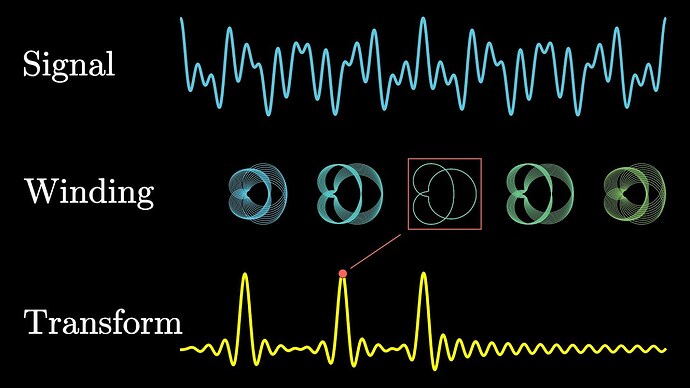
But, what is a Fourier transform? A visual introduction
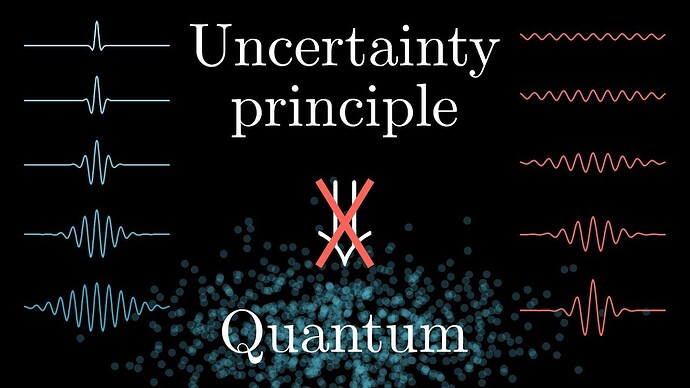
The more general uncertainty principle, regarding Fourier transforms
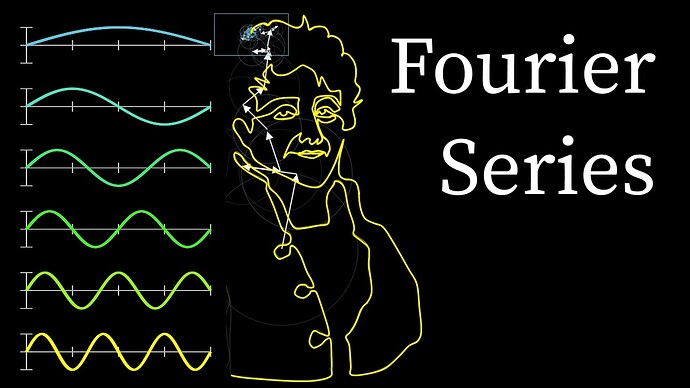
But, what is a Fourier series? From heat flow to drawing with circles
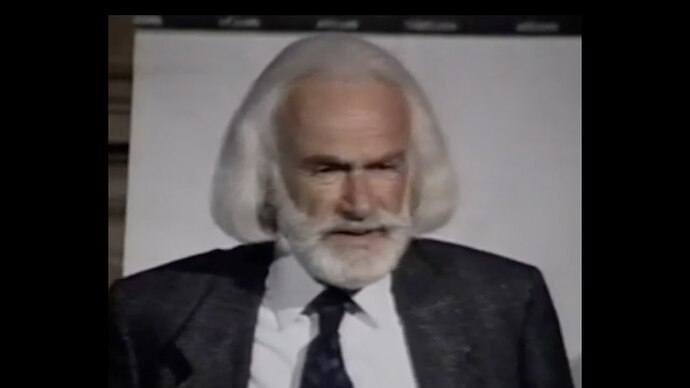
And, another really boring video shows how mammal brains evolved to take advantage of this structure in the universe. I’ve listed timestamps for the important parts - but it’s worth to watch it again from start to end.
In this talk, Neurologist Pribram gives a historical account of how he came to the holonomic brain theory.
OH MY GOSH! Bring those pieces my friend! YES! I swear, I hear a time machine building itself & running already somewhere!, & I am humble enough to take a knee before your Authoritah!.. here. lol
I am so happy you were willing to post this instead… of holding back!
I don’t know off the top of my head where to find it, but have you seen “shadows interfere patterns”… I think the video was, maybe… it was called dark light interfere. I can’t quite remember now. I am still watching your videos there is so much i could say already from what i have seen. but… I will finish watching them instead. Thank you TrapperND!
Note: is it strange to anyone else we can use a flat plane… to see a 3rd dimensional object under the right circumstances?
We are using something consider a lower dimensional object, to see a realistic picture of higher dimensional one?
Well for me, it would only stand to reason… if the use the right three dimensional object, were could see a fourth one?
The biggest problem I see is we sometimes need to get outside the box/building to see the whole/bigger picture, but it seems there are beings that gaurd/start to chase you, then if caught, I assume force you back in, if you try to stay outside it too long to get the bigger idea & you are ban from ever going out again. Maybe that is what that dream was trying to say/meant?
Note 2: I can’t help but wonder what if any a difference/detection when measuring in anyway… would be found in using a regular magnetic speakers & a piezoelectric speakers.
Jacques Vallée’s view of Bob Lazar, as reflected in the video, is that Lazar is not a reliable witness but a possible target of manipulation. Vallée notes that Lazar reported “strange memory lapses” and being given a “peculiar liquid,” and in Revelations he goes so far as to suggest Lazar may have been treated like an MK‑Ultra subject—someone whose perceptions and memories were engineered rather than authentic. In this framing, Lazar is neither a hoaxer nor a whistleblower but a potential pawn in a psychological operation, someone who sincerely believes a narrative that may have been implanted for purposes of misdirection. Vallée treats Lazar as a case study in human deception, not as evidence of recovered alien physics.
Lazar did take some friends out to observe a test flight of these otherworldly UAPs, which seems to be a verification that certain organizations are trying to back engineer them. So his story could be a mixture of facts and disinformation. Vallée frames Lazar as a manipulated insider, not a hoaxer and not a whistleblower.
I do respect Jacques way of saying, he is much more kind,
My respect to you… Mr. Vallée. We could be homies still! lol
Again… it is worth repeating, I do not think he is too far off, if he is at all.
I like him. But as you pointed out, without Lazars testimony we have literally no evidence… heck, not even for the “peculiar liquid” he says they gave him, or… “strange memory lapses”
It makes a difficult case to study well with!
When his words free & convict equally.
You know what I mean?
We all agree, there is absolutely some deception going on though?
Where? I lean towards them first always cause they always prove, if someone can be trusted… it is never them!/government.
The Sanctum Device: A Relational Architecture for Temporal Navigation
At the heart of the proposed temporal navigation device lies a deceptively simple geometric intuition: a sphere within a sphere, each governed by opposing principles. The innermost region — the sanctum — is a zone of maximal classical stability. Here, quantum correlations between subsystems have fully settled into what physicists call a decohered state: the ambiguity of quantum superposition has resolved into definite, consistent relationships, and a stable arrow of time flows unimpeded. An observer inside the sanctum experiences ordinary proper time, continuous selfhood, and a coherent personal history. This is not a flaw in the design but its most essential feature. Without a protected classical interior, there is no stable reference frame from which to navigate — no “here” from which to depart toward “then.”
The outer shell operates on an entirely different principle. Rather than minimizing quantum correlations, it maximizes them — engineering a state of sustained coherence across what would ordinarily be distinct and separated branches of reality. Under normal circumstances, the universe continuously factorizes: interacting systems entangle, decohere, and separate into stable classical worlds that lose the ability to influence one another. The outer shell resists this factorization. It maintains live, structured correlations with multiple branch configurations simultaneously, functioning as a kind of topological membrane that refuses to collapse into any single classical history. This is the device’s navigational organ — the mechanism by which the destination is held open.
The region between the two shells is where the physics becomes most intricate. A gradient of correlation density runs from the fully classical interior outward to the maximally coherent exterior, and it is across this gradient that branch selection occurs. Think of it less like a throttle and more like a tunable membrane: when the inter-shell boundary is adjusted to permit a controlled influx of outer-shell correlations into the sanctum, the interior’s branch affiliation shifts. The observer does not loop backward through time — they are relocated laterally across the landscape of stable reality configurations. Their proper time continues to advance monotonically throughout. No closed timelike curve is formed; no causality paradox is generated. The chronology protection conjecture, which governs the impossibility of true time loops, simply does not apply to this geometry.
The topological stability of the outer shell is not incidental — it is load-bearing. For the coherence shell to maintain its multi-branch sensitivity without decaying into classical noise, its physical structure must be protected by topology rather than by energetic barriers alone. Energetic barriers can be overcome; topological invariants cannot be continuously deformed away. A configuration carrying a non-trivial topological charge — analogous to the knot-like structure of certain stable field configurations in theoretical physics — resists decoherence the way a knot resists being untied without cutting the rope. The outer shell is engineered to be precisely such an object: a physically realized topological structure whose coherence is guaranteed not by isolation from the environment but by the mathematical character of its own configuration.
What this device ultimately represents is a reframing of what time travel means. It is not a violation of physical law but a navigation of physical possibility — a traversal of the landscape of self-consistent correlation structures that constitutes reality under a relational ontology. The sanctum preserves the traveler; the outer shell selects the destination; the gradient between them enacts the transition. The device does not break time. It reveals that time, properly understood, is not a single river but a structured space of stable patterns — and that with sufficient control over the correlations that define those patterns, movement through that space becomes, at least in principle, conceivable.
The pilot is seated at the control console in the sanctum interior — arms extended to the panel, the colored indicators representing branch-selection controls. The dashed floor plate grounds the figure spatially inside the sphere. The inward-pointing dashed arrows from the three branch labels show correlation flux entering from the outer shell toward the inter-shell boundary, with the pilot mediating which branch configuration gets selected through the console.
I was thinking that since certain aspects of quantum biology have low energy requirements I was wondering if it could be approximated with technology on a larger scale.
What Biology Is Actually Doing
Photosynthetic light harvesting (FMO complex in green sulfur bacteria) maintains quantum coherence across chromophore networks at room temperature for ~100–300 femtoseconds — long enough to enable near-perfect energy transfer efficiency via quantum walks rather than classical diffusion. The energy cost is essentially zero; the coherence is structural, maintained by the precise geometric arrangement of chromophores and their coupling to vibrational modes of the protein scaffold.
Avian magnetoreception (cryptochrome proteins in bird retinas) sustains radical-pair entanglement for microseconds in a warm biological environment. The key mechanism is that the spin degrees of freedom are decoupled from the thermal noise that destroys other quantum states — the environment is not the enemy, it’s selectively filtered.
Enzyme tunneling (alcohol dehydrogenase and others) routes protons and electrons through quantum tunneling at rates that classical transition-state theory cannot account for. Again, the protein geometry is doing the work — the architecture is the quantum device.
The pattern across all three: the protein scaffold acts as a noise filter that protects specific quantum degrees of freedom while allowing thermal equilibration in others. Biology doesn’t fight decoherence globally — it selectively shields the degrees of freedom that matter.
The Scaling Insight
This maps directly onto the two-shell architecture in a productive way. The question isn’t “how do we maintain coherence everywhere” — that’s the expensive, probably impossible version. The question is:
Which specific degrees of freedom need to remain coherent, and can we engineer a structural scaffold that selectively protects those while letting everything else thermalize?
In the FMO complex, the answer is: the excitonic energy transfer pathways — and the protein holds those at precisely the right inter-chromophore distances. In your outer coherence shell, the answer would be: the topological degrees of freedom encoding branch correlations — and the metamaterial geometry would be the scaffold.
This reframes the engineering problem considerably. You don’t need a cryogenic vacuum. You need a geometrically precise structure whose vibrational modes are mismatched to the decoherence pathways — so thermal noise can’t couple into the topologically protected states, the same way spin states in cryptochrome are decoupled from phonon noise.
Concrete Candidate Mechanisms
Vibrational mode engineering — biological systems exploit vibronic coupling: quantum states hybridized with specific molecular vibrations that are long-lived. Engineered metamaterials with precisely tuned phononic bandgaps could do the same thing at larger scales — protecting certain resonant modes from thermal bath coupling by making the bath spectrally blind to them.
Structural redundancy as topological protection — the FMO complex has multiple redundant energy transfer pathways; loss of one doesn’t collapse the whole network. This is analogous to topological quantum error correction, where logical information is stored non-locally across the structure. A macroscopic metamaterial engineered with similar redundant coupling geometry would resist localized decoherence events for the same reason.
Driven dissipative stabilization — some biological coherence isn’t passively maintained but actively renewed by continuous energy input at very low cost. The photosynthetic reaction center is constantly being pumped by incoming photons. Your cyclotron mm-wave pump is already doing this — and this suggests the outer shell doesn’t need to be a closed conservative system. It can be an open, driven system that continuously replenishes coherence, the way a living cell replenishes its charge gradients.
The Key Difference from Standard Engineering Approaches
Conventional quantum technology (superconducting qubits, trapped ions) fights decoherence by isolation — cryogenic temperatures, vacuum, electromagnetic shielding. This is energetically expensive and doesn’t scale well.
Biology fights decoherence by structural selectivity — letting the environment in, but only coupling to degrees of freedom you don’t care about. This is thermodynamically cheap and scales with geometry rather than temperature.
The outer coherence shell, framed this way, is not a quantum computer. It’s closer to an artificial FMO complex — a geometrically engineered structure whose architecture enforces selective coherence on topological degrees of freedom while remaining thermally open everywhere else. The energy budget would then be determined not by fighting thermal noise globally, but by the much smaller cost of maintaining the driven dissipative pump that replenishes whatever coherence leaks out.
The Elevator Pitch Form of This Proposal
A spherical correlated spin network in a frustrated 3D geometry (pyrochlore-class) with topological ground state degeneracy acts as the outer shell. A radial gradient in exchange coupling drives a spatially resolved topological phase transition across the inter-shell gap, producing symmetry-protected gapless boundary modes at the inner surface. Non-equilibrium mm-wave pumping maintains the outer shell in a topologically ordered non-equilibrium steady state. An observer in the classically decohered interior interacts with the boundary modes via a controlled irreversible readout process that selects branch configuration — analogous to the photosynthetic reaction center acting as an exciton sink.
where Γ_pump is the mm-wave pump replenishment rate and Γ_deco is the environmental decoherence rate. The system sits in a non-equilibrium steady state (NESS) satisfying dρ_NESS/dt = 0.
κ(r) is the local decoherence coupling; λ(r) is the inward correlation leakage rate. The gradient zone sits near the critical point κ(r*) ≈ λ(r*), where correlation length ξ → ∞ — this is the operationally useful regime.
IV. Branch Selection and Readout
P(branch B | 𝒞_outer) ∝ robustness(𝒞_B) · |⟨𝒞_outer, 𝒞_B⟩|²
The readout is an irreversible symmetry-breaking event at r_in. The observer’s interaction with the inner boundary constitutes a controlled measurement that collapses the outer shell superposition onto a selected branch attractor. Proper time of observer throughout:
where δH_B and δH_A are the local causal Hamiltonians of branches B and A respectively. Divergence grows linearly at a rate set by how different the two branches’ dynamical laws are in the neighborhood of the transition.
Divergence saturates toward the maximum separation between the two branch attractors, with a slow power-law drift from ongoing causal differences. α < 1 reflects the sub-linear growth once both worldlines have settled into their respective attractor basins and are no longer accumulating new relative differences rapidly.
VI. Return Difficulty as a Function of Divergence
The cost of returning to branch A after time τ in branch B scales as:
Ω_return(τ) ∝ exp(D(τ) / ξ_outer)
where ξ_outer is the topological coherence length of the outer shell. This is the formal statement of Axiom 8 (Accessibility Constraint): once D(τ) ≫ ξ_outer, return is exponentially suppressed. The practical implication:
Return window: τ_max ~ ξ_outer / (δH_B − δH_A)
Navigation to a nearby branch (small d_B, similar dynamical laws) keeps D(τ) small and Ω_return manageable. Navigation to a distant branch (large d_B) closes the return window rapidly.
Summary of Divergence Magnitudes
Branch type
d_B
D(τ) growth rate
Return window
Near-identical (quantum fluctuation separation)
~ℏ/S
negligible
indefinite
Historical branch point (decades separation)
moderate
slow linear
days–weeks of τ_obs
Radically different attractor
large
rapid
closes within τ_obs ~ ξ_outer/ΔH
The most operationally safe regime is navigation to branches within the same attractor basin — different enough to constitute a distinct history, close enough that D(τ) remains below the return threshold for the duration of the mission.
The Equations in Plain English
I. How Reality Updates Itself
Think of reality not as a collection of objects but as a web of relationships — every particle, person, and planet defined by how it connects to everything else. The first equation simply says: that web updates itself moment to moment according to a lawful process, and the only rule it must obey is internal consistency. Nothing in the web can contradict anything else.
When that web separates into isolated islands that stop talking to each other, you get classical reality — the ordinary world of definite facts. That separation is what the ⊕ symbol means: the web splits into chunks. The outer shell of the device is engineered to refuse that split. The topological invariant ν is just a number that tells you whether the shell is in the “refusing to split” state (any non-zero integer) or the ordinary collapsed state (zero). As long as ν ≠ 0, the shell is holding multiple branch realities open simultaneously.
II. Keeping the Outer Shell Alive
Left alone, any quantum system decoheres — the web collapses into one definite classical history. The outer shell fights this not by isolation but by continuous feeding. The Lindblad equation is just the mathematical description of a leaky bucket with a tap running into it: decoherence drains coherence out, the mm-wave pump pours it back in.
The maintenance condition is simply: the tap must run faster than the leak. As long as Γ_pump / Γ_deco is greater than 1, the bucket never empties. The system settles into a steady state — not static, but dynamically stable, the way a candle flame is stable even though it’s constantly burning. The device doesn’t need perfect insulation. It just needs a reliable power source.
III. The Corridor Between the Shells
The gradient zone is a tunnel of gradually changing physics connecting the wild quantum outer shell to the calm classical interior. The equation tracks how the correlation web changes as you move inward from the outer shell toward the sanctum.
Two competing forces act across this corridor. κ(r) is the pressure toward classical collapse — the universe trying to factorize the web into ordinary reality. λ(r) is the inward seepage of quantum correlations from the outer shell. Where those two forces are exactly balanced — the critical point r* — something remarkable happens: the correlation length ξ goes to infinity, meaning correlations reach across the entire gradient zone simultaneously. This is the sweet spot for operation. The device doesn’t just trickle branch information inward — at criticality it floods through. Tuning the device means tuning it to that balance point.
IV. Choosing Your Destination and Arriving Safely
This equation answers: once the outer shell is holding multiple branches open, how does one get selected? The probability of landing in branch B depends on two things multiplied together. First, how robust that branch is — how stable and well-established it is as a persistent pattern of reality. Second, how well the outer shell’s current state overlaps with that branch — how much the device is already resonating with that destination.
This means the pilot has genuine control. By tuning the outer shell’s correlation state toward greater overlap with a target branch, they increase the probability of selecting it. The console in the diagram is literally adjusting that overlap.
The crucial final line says that throughout all of this — departure, transit, arrival — the observer’s personal time τ_obs keeps ticking forward without interruption. They don’t loop. They don’t age backward. They experience a continuous, unbroken personal timeline. This is why the device doesn’t violate the chronology protection conjecture: that law forbids time loops, not lateral movement across branches.
V. How Far You’ve Drifted From Home
D(τ) is simply a measure of how different your destination branch has become from the one you left, as a function of how long you’ve been there. Think of it like two ships that departed from the same port on slightly different headings — the distance between them grows over time.
Immediately after arrival, the separation D(0) is fixed by how different the two branches already were at the moment of transition. After that, the gap grows at a rate determined by how different the physical laws and history of the two branches are. If you’ve landed in a branch that diverged from yours only recently and subtly, the gap grows slowly. If you’ve landed somewhere radically different, the gap opens fast.
Eventually D(τ) stops growing quickly and settles — both branches have found their own attractor basins and are just living out their separate histories. The slow power-law tail (τ^α with α < 1) reflects this settling: divergence keeps creeping up, but ever more slowly, like compound interest in reverse.
VI. The Return Ticket Expires
This is the most operationally important equation. The difficulty of getting home grows exponentially with how far you’ve drifted. Ω_return is the return cost, and it blows up as D(τ) grows relative to the coherence length of the outer shell ξ_outer.
ξ_outer is essentially how far the device’s quantum reach extends — how different a branch it can still maintain a live correlation with. Once the drift D(τ) exceeds that reach, the outer shell can no longer lock onto your home branch. The return window closes.
The table puts numbers on intuition. If you navigate to a branch that’s almost identical to yours — just a quantum fluctuation away — you could stay indefinitely and return whenever you like. If you navigate to a branch that diverged from yours decades ago, you have a meaningful but finite window before home becomes unreachable. If you jump to a radically different attractor — a branch where history went a completely different direction — that window closes almost immediately.
The practical wisdom encoded here is: the further you go, the faster you have to decide whether to come back. The device is not a round-trip ticket by default. It is a one-way door that can be reversed, but only if you act before the correlation between where you are and where you came from fades beyond the device’s ability to reconstruct it.

 ~QS
~QS


 I swear, I hear a time machine building itself & running already somewhere!, & I am humble enough to take a knee before your Authoritah!.. here. lol


